If your university uses GradImages for events photography, you are not alone and neither are the complaints. Across student forums, review boards, and university procurement conversations, the pattern is consistent:
- poor photo quality,
- missing images,
- pricing that shocks graduates,
- and customer service that doesn’t respond.
The good news is that universities now have real alternatives. This guide covers the five best GradImages alternatives for event photography in 2026, what to look for when evaluating a replacement vendor, and how modern AI-powered platforms are changing what graduates expect from photo delivery on the day of their ceremony.
Why Universities Are Rethinking GradImages
GradImages is the world’s largest photography provider, photographing over 1.8 million graduates per year across hundreds of university contracts. That scale is precisely where the problems start.
Graduates at institutions ranging from Georgia Tech and the University of Maryland to UMGC have posted publicly about the same cluster of issues: photos that never arrived, quality too low to print, a customer service phone number that connects to the wrong company, and a refund policy that requires paying out-of-pocket to ship physical prints back before any money is returned.
On PissedConsumer, GradImages holds a 1.1 out of 5 stars based on over 60 verified reviews as of mid-2025. Specific complaints in those reviews include photographers who failed to capture all ceremony positions, digital downloads with resolution too low to support a standard 12×10 print despite the company’s 35-year track record, and charges applied to payment cards before the customer confirmed purchase.
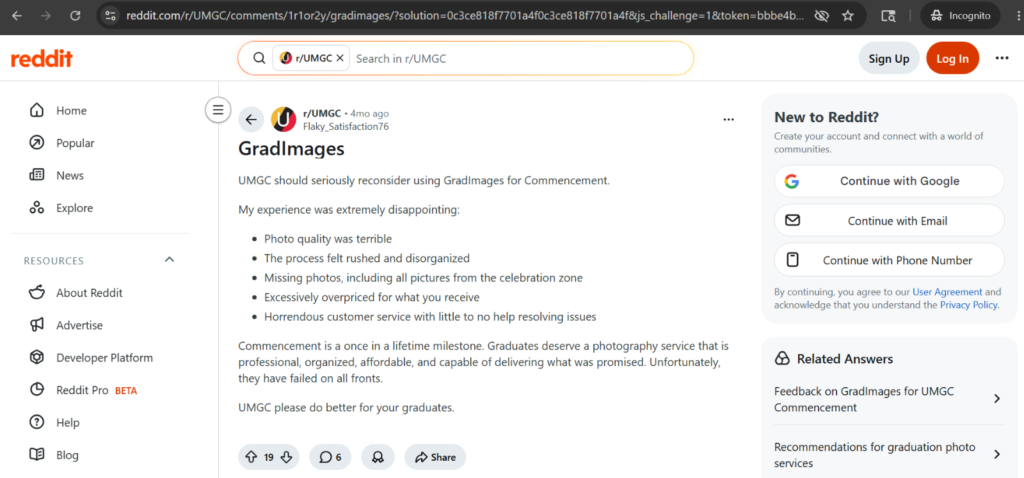
For a university, this creates a reputational problem. Convocation-like events are a once-in-a-lifetime milestone for students and their families. When the contracted photography vendor underdelivers, the complaint does not land on GradImages, it lands on the institution. That is why a growing number of university committees are now evaluating alternatives ahead of contract renewals.
What to Actually Look for in a Graduation Photo Platform
The best graduation photo platform for a university does several things that a traditional staged photography vendor does not. Here is a practical evaluation checklist for any procurement or student affairs team reviewing vendors:
- Photo delivery speed: Can graduates access their photos the same day? Within 24 hours? Platforms that require 2–4 weeks to deliver proofs create unnecessary follow-up volume and dissatisfaction.
- Per-graduate pricing transparency: Does pricing depend on what each graduate buys, or does the university pay a flat institutional rate? Volume-based institutional pricing is far more predictable for budget planning than per-graduate retail models.
- Guest experience with no app download required: Making graduates download a new app to access their photos is a friction point that reduces engagement. The best platforms use a QR code + selfie flow that works entirely in a mobile browser.
- Privacy controls: Can guests see only their own photos? At an event with 3,000 graduates, you cannot have one graduate accessing another’s photos. Face-recognition-based private galleries are now the standard for compliant photo sharing.
- White-label / custom branding: Does the gallery interface carry the university’s brand, or the vendor’s? University-branded photo delivery reinforces institutional identity at a key emotional moment.
- Post-event support SLA: What happens when a photo is missing, blurry, or mis-tagged? A defined SLA and a support channel that actually responds are non-negotiable for institutional contracts.
Use these six criteria when scoring any vendor during RFP evaluation.
The 5 Best GradImages Alternatives for Universities in 2026
1. TurtlePic
Best for: Universities that want instant, self-serve photo delivery on events like convocation day with no app download required.
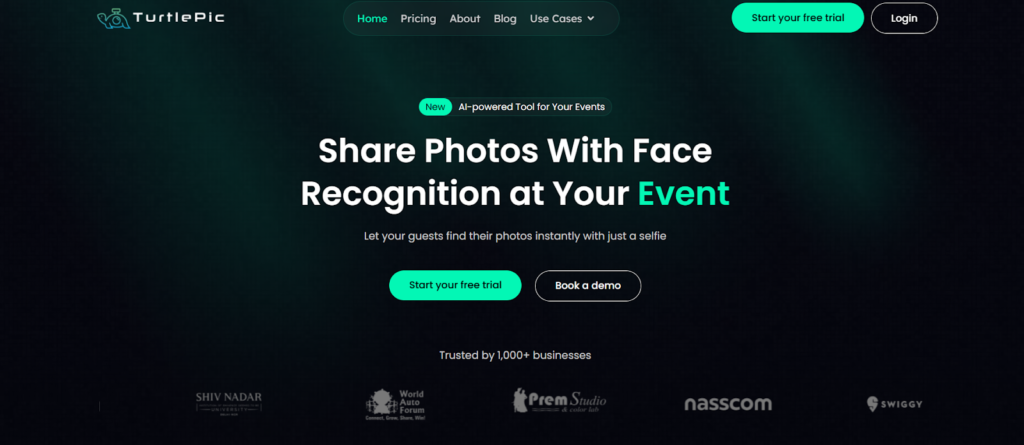
TurtlePic is an AI-powered event photo sharing platform built around face recognition. At events , photographers upload the day’s photos to TurtlePic in bulk. Graduates scan a QR code displayed at the venue or sent via WhatsApp/email, take a quick selfie, and the platform’s face recognition engine with 99.9% matching accuracy, instantly identifies every photo of that graduate in the event and delivers a private, premium gallery directly to their phone on same day, before they even leave campus.
No app download. No scrolling through thousands of images. No waiting weeks for proofs. Graduates choose from premium gallery themes to view and download their photos, and the university controls the branding on every gallery page.
Access link flexibility is one of TurtlePic’s more useful institutional features. Universities decide how they want graduates to experience the gallery. With a full access link, graduates can browse the entire event photo album with all ceremony photos and also use face recognition to search specifically for their own photos. This is ideal for universities that want to encourage community sharing and generate organic UGC from the ceremony. With a limited access link, graduates can only view and download their own matched photos via face recognition, they cannot browse the full album. This option is better suited for institutions with stricter data privacy policies or those who prefer a more controlled, graduate-specific experience.
Universities using TurtlePic have seen thousands of impressions on shared galleries, strong download volumes, and a high number of selfie searches per event, all of which generate organic social sharing and UGC that the university benefits from without running a separate campaign. Graduates sharing their own ceremony photos, tagged to the institution, is some of the most credible content a university can earn.
Pricing is storage-based at the institutional level, which means universities pay a predictable platform fee rather than absorbing the cost unpredictability of a per-purchase retail model.
Limitation: TurtlePic does not provide on-ground photographers – you retain your own photography team or existing contracted shooter, and TurtlePic handles the distribution layer.
2. Cady Studios
Best for: Universities in the United States looking at photography sales operations.
Cady Studios (part of School Photographers of America) offers end-to-end photography – photographers on site, staged portrait sessions, print packages, and an online ordering portal. They are one of the largest school-focused photography companies in the US and offer dedicated institutional account management.
Limitation: Cady operates on a retail package model similar to GradImages. Customer reviews note that packages are built around physical prints rather than digital-first delivery, which can feel outdated for a 2026 graduate cohort that primarily wants a shareable digital image. Portrait sessions are priced at $199–$299, and digital-only pricing has been a point of friction in public feedback.
3. HR Imaging Partners
Best for: Schools and universities primarily in the Midwest and Northeast US seeking a regional, full-service photography partner.
HR Imaging Partners specialises in school and event photography, covering portrait sessions, candid event photos, and post-event online ordering. As a founding member of School Photographers of America, they bring operational infrastructure and multi-location coverage.
Limitation: Regional coverage means they may not service all university locations, and their product catalogue skews toward traditional print packages rather than digital-first or AI-driven delivery.
4. Edge Imaging
Best for: Canadian universities and institutions in international markets looking for a GradImages alternative with established higher-education contracts.
Edge Imaging is Canada’s largest student photography company, with a strong university portfolio. They offer on-site photography, custom print packages, and an online photo ordering system, with institutional contracts structured around university partnerships.
Limitation: Primarily Canada-focused. US and international universities outside Canada would need to verify availability. The platform is traditional photography delivery rather than AI-powered, so photo retrieval relies on the graduate browsing an event gallery rather than self-serve face matching.
5. Local / Regional Photographers + a Photo Sharing Platform
Best for: Universities with existing photographer relationships who want to upgrade the delivery experience without switching vendors entirely.
This is an underused option. Many universities have long-standing relationships with local or regional photographers who are familiar with the campus, the ceremony format, and the graduating cohort. The gap is almost always in distribution – not photography. Adding a platform like TurtlePic to an existing photographer workflow means the university keeps the shooting relationship it trusts and replaces only the part that consistently fails: getting photos into the hands of graduates quickly, privately, and without friction.
This hybrid model often delivers the best outcome: photographer accountability is local, delivery accountability is platform-based, and graduates get both quality and speed.
How TurtlePic’s Selfie-Based Photo Delivery Works at University Events
TurtlePic’s workflow is designed to eliminate the three most common failure points of traditional graduation photo vendors: missing photos, late delivery, and poor graduate experience.
Here is how the process works from setup to delivery:
Step 1 – Create the event on TurtlePic
The university or organiser creates an event on TurtlePic. This takes a few seconds and generates everything needed for the rest of the workflow, the event gallery, the QR code, and the registration link for attendees.
Step 2 – Graduates receive the QR code and can pre-register
As soon as the event is created, a QR code is automatically generated. Graduates and attendees have the option to register themselves before the ceremony so they receive an instant notification the moment photos go live. For anyone who misses the pre-registration, organisers can place QR codes at the venue on the day – at entry points, on stage, or at the celebration zone so no one is left out.
Step 3 – Upload all ceremony photos
After the ceremony, the photographer bulk-uploads the full event album to TurtlePic. The platform processes every photo and runs face detection across the entire album automatically. This takes minutes, not hours making same-day delivery to students fully achievable.
Step 4 – Choose the type of link to share with graduates
Before publishing, the university decides how graduates will access the gallery. A full access link lets graduates browse the complete event album and also use face recognition to search for their own photos, ideal when the university wants to encourage organic sharing and generate UGC from the ceremony. A limited access link means graduates can only view and download their own matched photos via face recognition, with no access to the wider album. This option suits institutions with stricter privacy requirements or those who prefer a more controlled, graduate-specific experience. The right choice depends on the institution when both options are available on every event.
Step 5 – Graduates find their photos instantly with a selfie.
Graduates open the link on their phone’s browser – no app download required and take a single selfie. TurtlePic’s face recognition engine matches the selfie against the full event album and instantly surfaces a private, premium gallery of every photo of that graduate. They can share their photos on the same day as their ceremony.
Universities using TurtlePic generate thousands of gallery impressions, strong selfie search volumes, and high download counts per event. When graduates share their own ceremony photos on social media pulled from a branded TurtlePic gallery, it creates authentic UGC that the university benefits from without any additional marketing effort. That kind of organic reach from a single university event is something no traditional photo vendor has ever been positioned to deliver.
For universities concerned about data privacy and compliance, TurtlePic’s face recognition model processes and matches biometric data during the session without storing facial templates beyond the event window, aligning with privacy requirements across most institutional data governance frameworks.
Pricing Comparison: GradImages vs Alternatives
One of the most consistent complaints about GradImages documented across Reddit communities at Georgia Tech, the University of Maryland, UMGC, and others is pricing that graduates call “shocking” after the ceremony.
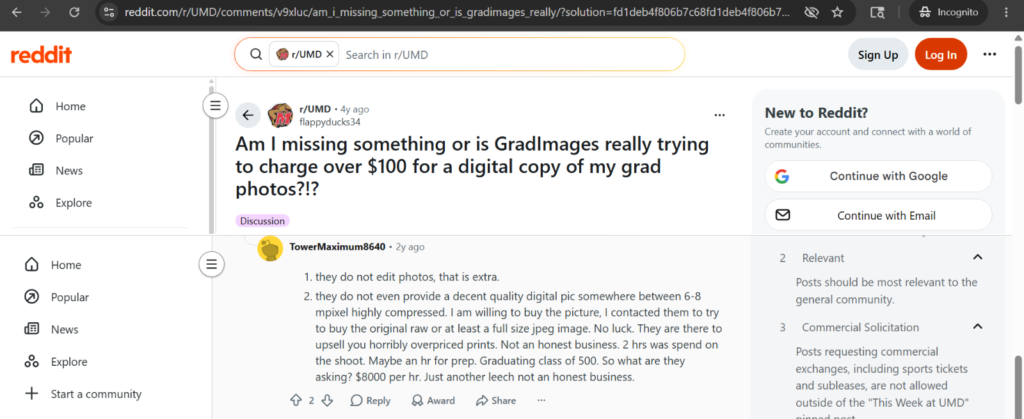
The issue is structural. Traditional graduation photography vendors like GradImages operate on a B2C retail model: the university contracts the photographer, but the revenue comes from selling photo packages directly to graduates. This creates an adversarial dynamic where the vendor’s incentive is to charge graduates as much as possible per image.
Here is how the pricing models compare across the main options:
Graduation is one of the most memorable milestones in a student’s life — especially for someone who is graduating for the first time or has put years into earning that degree. Putting a paywall between a graduate and their own ceremony photos is not just a poor experience; it actively discourages them from sharing those photos publicly. A graduate who has to pay $40 or $100 to download a single image is far less likely to post it, share it, or tag their university than one who receives their photos for free on the day itself.
For universities, this is a quietly expensive trade-off. By contracting a vendor whose model depends on charging graduates, institutions are effectively leaving significant UGC reach on the table. Every unshared photo is a missed impression — a piece of organic, authentic content that would have reached the graduate’s entire network and reflected positively on the institution. At scale, across hundreds or thousands of graduates, that is a substantial amount of brand visibility that costs the university nothing to generate but is consistently blocked by a pricing model that was never designed with the university’s interests in mind.
Here is how the pricing models compare across the main options:
| Feature | TurtlePic | GradImages | Cady Studios | HR Imaging Partners | Edge Imaging |
| Pricing model | Institutional flat fee | Retail per graduate | Retail per graduate | Retail per graduate | Retail per graduate |
| Graduate cost | Free | $40–$140+ | $199–$299 per session | Varies | Varies |
| AI face recognition | ✅ Yes | ❌ No | ❌ No | ❌ No | ❌ No |
| Same-day photo delivery | ✅ Yes | ❌ No | ❌ No | ❌ No | ❌ No |
| No app download required | ✅ Yes | ❌ No | ❌ No | ❌ No | ❌ No |
| Premium gallery themes | ✅ Yes | ❌ No | ❌ No | ❌ No | ❌ No |
| Full / limited access link control | ✅ Yes | ❌ No | ❌ No | ❌ No | ❌ No |
| UGC generation for university | ✅ Yes | ❌ No | ❌ No | ❌ No | ❌ No |
| White-label / university branding | ✅ Yes | ❌ No | ❌ No | ❌ No | ❌ No |
| Pre-event attendee registration | ✅ Yes | ❌ No | ❌ No | ❌ No | ❌ No |
| WhatsApp / email delivery | ✅ Yes | ❌ No | ❌ No | ❌ No | ❌ No |
| On-ground photographers provided | ❌ No | ✅ Yes | ✅ Yes | ✅ Yes | ✅ Yes |
The key distinction: under a traditional retail model, the vendor’s revenue depends on convincing graduates to spend money post-ceremony. Under TurtlePic’s institutional model, the university pays a platform fee and graduates access their photos at no individual cost. This removes the conflict of interest entirely, eliminates the pricing complaints that consistently damage institutional reputation, and unlocks the UGC reach that universities have been quietly missing out on.
Frequently Asked Questions
What is the best platform for university event photo sharing in 2026?
The best university event photo sharing platform depends on whether your university also needs a photographer or just a delivery platform. For universities that want students to receive their photos instantly on the day of any event from convocation, graduation to annual day without purchasing a package, TurtlePic’s face recognition delivery model is currently the most direct solution. For universities that need end-to-end photography and print fulfilment, Cady Studios or HR Imaging Partners are the most established full-service alternatives to GradImages.
How does face recognition work for university event photo delivery?
Face recognition photo delivery works by scanning every photo in the event album for faces, then matching a selfie taken by the student against that library of detected faces. When a match is found, the system assembles a private gallery containing only the matched photos and delivers it to the student via their phone without requiring them to browse the full album. TurtlePic’s recognition engine achieves 99.9% matching accuracy across large-scale university events.
How do students receive their photos without downloading an app?
TurtlePic’s flow works entirely in a mobile browser. A student scans a QR code shared at the venue or via WhatsApp/email, takes a selfie through the browser, and receives their matched photo gallery delivered directly to WhatsApp or email – no app store visit, no account creation, no password. The entire process is designed to work on any smartphone without any prior setup by the student.
Is a student’s face data safe when they take a selfie to search for their photos?
Yes. When a student takes a selfie on TurtlePic to search for their photos, their face data is fully encrypted and never shared with any third party. TurtlePic uses the selfie solely to match the student against the event album — once the match is made and the gallery is delivered, the facial data is not stored or retained beyond the session. No face template is saved, sold, or used for any purpose outside of that single photo retrieval. Students can search for their photos with confidence that their data stays private.
Conclusion
GradImages’ dominance in the university event photography market is built on institutional inertia, not graduate satisfaction. The review data, the Reddit threads spanning multiple top universities, and the structural conflict of interest in their pricing model all point in the same direction: universities that renew GradImages contracts without evaluating alternatives are accepting a reputational risk that is easily avoidable.
The market has genuinely better options in 2026. Full-service alternatives like Cady and HR Imaging Partners offer more accountable institutional relationships. AI-native platforms like TurtlePic offer something different: photo delivery that graduates actually enjoy — instant, private, app-free, and on-brand for the university.
If your next university event is coming up and you want to see how selfie-based face recognition photo delivery would work for your graduating cohort, book a TurtlePic demo for universities → and we will walk you through the full setup in under 30 minutes.