Wedding photography in 2026 is no longer defined by images alone. Speed, access, privacy, and the overall photo experience now play an equally important role.
Couples expect faster delivery, guests want effortless access to their photos, and photographers are being evaluated on far more than just their portfolios. How photos are shared, discovered, and experienced has become part of the service itself.
These changing expectations are redefining workflows and tools across the industry. In this blog, we break down the wedding photography trends for 2026 that every photographer needs to understand to stay relevant and competitive.
TL;DR
- Wedding photography in 2026 is as much about delivery, access, and experience as it is about image quality.
- Faster photo delivery and live access are becoming baseline expectations, not premium add-ons.
- AI-powered photo discovery and privacy-first sharing are reshaping how guests interact with wedding photos.
- Couples now evaluate photographers on the full guest experience, including ease of access and inclusivity.
- Technology, data, and integrated workflows are becoming key competitive advantages for modern photographers.
Wedding Photography Trends for 2026
Here are the wedding photography trends every photographer should be paying attention to in 2026:
1. Faster Photo Delivery Is Becoming a Baseline Expectation
Weddings today are highly shareable moments. Couples document their day in real time, from behind-the-scenes clips to first looks and dance floor chaos. Friends, family, and guests do the same.
The celebration no longer ends at the venue. It continues online. Social media plays a big role here. The excitement around a wedding stays alive only when there’s something to share. When photos arrive weeks later, that momentum is often gone. This shift is one of the biggest drivers behind faster photo delivery becoming an expectation rather than a bonus.
Why couples now expect quicker photo delivery:
- Instant sharing on social media to keep the buzz alive
- Reliving the day sooner while emotions are still fresh
- Sharing with distant or elderly family members quickly
- Using photos for thank-you cards and follow-ups
- Reassurance through early previews that builds confidence post-wedding
As a result, couples and guests no longer want to wait weeks. Same-day previews and instant access during the wedding are quickly becoming standard in modern wedding photography, not a premium add-on.
2. AI-Powered Photo Discovery Is Replacing Manual Browsing
Scrolling through thousands of wedding photos is outdated. Guests have dealt with this problem for years, and patience for it is running out.
When someone opens a wedding gallery, they usually want one thing. Their own photos. Not endless group shots, not strangers on the dance floor. Just the moments they’re in, so they can see how they looked and share them instantly.
AI-powered photo discovery solves this. Instead of manually browsing, guests can find their photos using face recognition and smart search. The experience is faster, more personal, and far less frustrating.
Platforms like TurtlePic are pushing this shift forward with high-accuracy AI that can identify faces even in challenging conditions, such as low light or partial visibility. For photographers, this means fewer questions, happier guests, and a far smoother delivery experience overall.
3. QR Codes Are Becoming a Standard Part of Wedding Setups
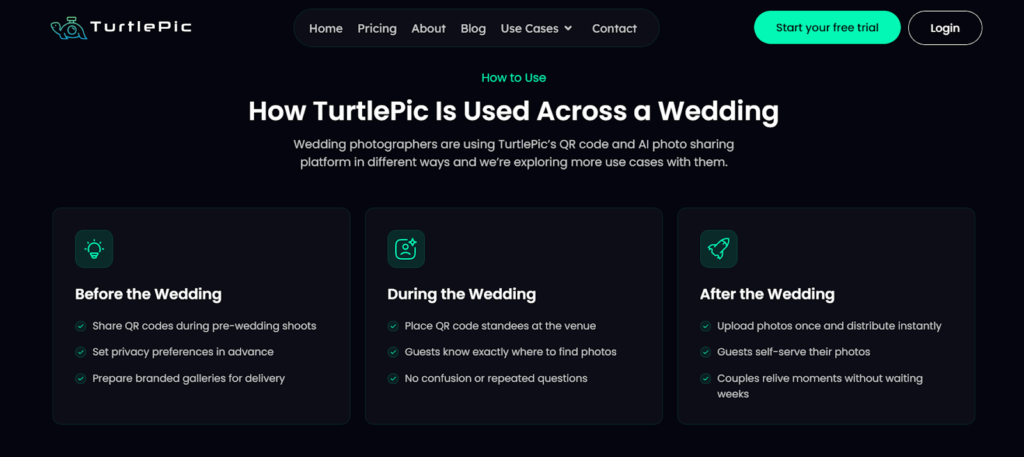
Sharing wedding photos should not require repeated explanations or chasing links. QR codes placed at entry points, tables, or near the bar are becoming a simple and effective way to guide guests directly to photo galleries. One scan, and they know exactly where to go.
This removes friction for everyone. Guests do not need to ask the couple or the photographer for links, and photographers avoid follow-up messages during and after the event. QR codes also fit naturally into modern wedding setups, blending easily with signage and décor.
4. Privacy-First Photo Sharing Is Non-Negotiable
A wedding album captures everything. Some photos are meant to be shared widely, like group shots, ceremony highlights, or dance floor moments. Others are more intimate. Emotional family interactions, private couple moments, or behind-the-scenes images that couples may not want everyone to see.
In traditional galleries, all photos often live in one open space. Guests end up seeing moments that were never meant for them, and couples lose control over who views what. This has become a growing concern.
As a result, privacy-first photo sharing is no longer optional. Couples now expect tools that allow controlled access, where guests can view only the photos meant for them. Platforms offering private galleries, face-based access, and permission controls are gaining trust over public links.
5. Live Photo Delivery at the Venue Is Gaining Momentum
Weddings move fast, and guests want to be part of the moment while it’s still unfolding. Seeing photos during the event changes how people experience the celebration. Guests can spot themselves, relive moments from earlier in the day, and share memories while the emotions are still high.
Live photo delivery makes this possible by publishing images as the wedding happens. Instead of waiting days or weeks, guests interact with photos on the same day, often within minutes. For photographers, this is becoming a clear way to elevate the guest experience and stand out in a space where expectations keep rising.
6. Photographer Branding Extends Beyond the Album
For many guests, the photo gallery is their first real interaction with a photographer’s work. Generic folders and plain download links do little to leave an impression. In contrast, clean and branded galleries feel intentional and professional. They quietly reflect the photographer’s style, attention to detail, and overall experience.
This matters because wedding guests are often future clients. When they browse, download, or share photos, they are also forming an opinion of the photographer behind them. A well-branded gallery becomes a subtle marketing channel that continues to work long after the wedding ends.
7. Fewer Tools, More Integrated Workflows
Wedding photographers often rely on multiple tools for editing, delivery, sharing, and access control. While this setup works, it adds friction and slows down post-wedding workflows.
Switching between platforms increases manual effort, creates room for errors, and complicates the experience for couples and guests. As expectations around speed and simplicity grow, this approach is starting to feel outdated.
In 2026, photographers are moving toward integrated platforms that manage the full post-wedding workflow in one place. Fewer tools mean faster delivery, fewer touchpoints, and a more consistent experience from edit to final gallery.
8. Couples Expect a Better Guest Experience, Not Just Great Photos
The overall photo experience, how guests access, find, and share images, is now part of how photographers are evaluated, not just image quality. Couples want the experience to work for everyone. Not just tech-savvy friends, but parents, grandparents, and distant relatives as well. If the process feels confusing or uneven, it reflects on the photographer.
For photographers, this means the guest experience is no longer separate from the work itself. A simple, inclusive photo experience has become a core part of modern wedding service delivery.
9. Data & Analytics Are Influencing Photography Businesses
Data and analytics are shaping businesses across industries, and photography is no exception. Photographers are beginning to use insights like gallery views, downloads, and engagement to understand what actually resonates with couples and guests.
Instead of guessing, they can see which photos get shared, which moments attract attention, and how people interact with galleries. These insights help photographers refine their portfolios, improve marketing, and make better business decisions overall.
10. Technology Is Becoming a Competitive Advantage for Photographers
Photographers who adopt modern delivery methods, AI-powered discovery, and privacy-first sharing are creating smoother, more reliable experiences for couples and guests. This goes beyond convenience. It directly shapes how professional and forward-thinking a photographer appears.
Those relying only on traditional workflows may still deliver great images, but they risk falling behind on expectations. In a competitive market, the ability to pair strong photography with smart technology is becoming a clear advantage.
Conclusion
Wedding photography in 2026 is about more than great images. Speed, access, privacy, and experience now define how photographers are judged. Photographers who adopt smarter delivery and sharing methods will stay ahead as expectations rise.
TurtlePic helps you do exactly that. With AI-powered photo discovery, privacy-first sharing, QR access, and real-time insights, it simplifies how wedding photos are delivered and experienced.
Start your free trial to see TurtlePic in action!