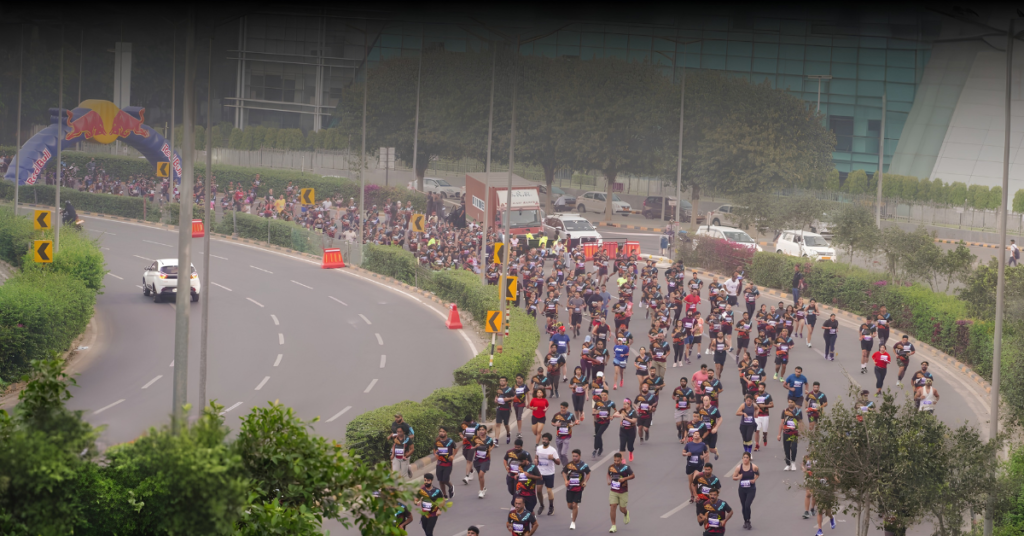
Crossing the finish line is the easy part. Finding your own photo afterwards – buried among tens of thousands of race shots is where the memory usually dies. At the 2024 Gurugram Marathon, Tuffman India solved that with AI marathon photo sharing: runners took a single selfie, and TurtlePic’s face recognition instantly surfaced every photo they appeared in, driving 34,000+ downloads and a 4.8 out of 5 satisfaction rating.
This case study breaks down the challenge Tuffman India faced, how TurtlePic’s selfie-based photo delivery worked on race day, the exact numbers it produced, and why AI photo sharing is now standard at every Tuffman event. TurtlePic has powered face-recognition photo delivery across marathons, summits, and campus events at scale – the Gurugram Marathon is one of the clearest examples of what that looks like in the real world.
The Challenge: Getting Race Photos to Thousands of Runners
The hardest part of marathon photography isn’t taking the photos – it’s getting each one into the right runner’s hands. A single mid-size race can generate tens of thousands of images across the start line, course markers, and finish, and the traditional ways of distributing them all break down at that scale.
Tuffman India has organized endurance-sports events across the country since 2014, and its participants expect a premium experience end to end. But the usual photo-delivery playbook worked against that promise. Bib-number search fails the moment a bib is folded, splashed, or hidden behind a hydration pack. Dumping everything into a shared drive leaves runners scrolling through thousands of strangers’ photos. And emailing galleries days later means the moment – and the social-media momentum has already passed.
For an organizer whose brand rests on athlete experience, “your photos will arrive next week, somewhere in this folder” simply wasn’t good enough. Tuffman needed instant, personal, and effortless delivery for thousands of runners at once.
The Solution: AI Face Recognition at the Gurugram Marathon
Tuffman India partnered with TurtlePic to replace bib-based sorting with selfie-based face recognition at the Gurugram Marathon on April 11, 2024. Instead of searching for their bib number or waiting for an email, participants simply took a selfie and let the AI find their photos for them.
TurtlePic is an AI-powered event photo-sharing platform built specifically for this problem. Its face-recognition engine matches a guest’s selfie against the entire event album and returns only the photos that person appears in — no app download, no manual tagging, no digging. TurtlePic’s face-recognition engine delivers 99.9% recognition accuracy, holding up across the harsh light, motion blur, and dense crowds that make race photography so difficult to sort by hand.
The shift was structural, not cosmetic. Bib search asks the runner to do the work and punishes anyone whose bib isn’t clearly visible. Face recognition flips that: the athlete’s own face becomes the search key, so a hidden bib, a turned torso, or a group shot no longer breaks discovery.
How Runners Found Their Photos
Runners found their photos in under a minute — but the flow actually started before race day, with the organizer. From setup to download, the whole journey ran through a single QR code and a selfie, with no app install and no account creation. The entire runner-facing experience happened in a mobile browser, which is exactly why participation was so high.
Here’s the end-to-end flow at the Gurugram Marathon:
- Organizer places the event QR code. Tuffman India displayed the TurtlePic event QR code across the venue – at the track, finish area, and race-day signage,The Results: Gurugram Marathon by the Numbers so every participant had one clear way in.
- Participants register with a scan. Runners scanned the QR code to register themselves for the event gallery, taking seconds and requiring no app download.
- Runners take a selfie once photos are live. As photographers’ images were uploaded, participants opened the gallery and took a quick selfie in their phone browser.
- The AI matches the face. TurtlePic’s face-recognition engine compared that selfie against every photo captured across the course and returned the runner’s personal gallery in seconds.
- Download and share. Each runner saw only their own shots — start line, mid-race, finish celebration — ready to download and post straight to social media.
Because there was nothing to install and nothing to remember, adoption didn’t depend on tech-savvy runners. Anyone who could take a selfie could retrieve their race memories, which is what turned a photo-delivery feature into an event-wide moment.
The Results: Gurugram Marathon by the Numbers
The deployment produced measurable, first-party results – not vanity metrics. Several thousand participants used the selfie search, and the engagement numbers reflected genuine satisfaction rather than a one-time novelty click.
| Metric | Result at the Gurugram Marathon |
| Face recognition accuracy | 99.9% |
| Selfie searches performed | 7,500+ |
| Photo downloads | 34,000+ |
| Feedback submissions | 800+ |
| Average satisfaction rating | 4.8 / 5 |
The standout figure is the ratio between searches and downloads: 7,500+ selfie searches produced 34,000+ downloads, meaning the average runner walked away with several photos, not just one. That’s the difference between a runner grabbing a single finish-line shot and a runner collecting their whole race story. A 4.8 out of 5 rating from 800+ pieces of feedback confirmed the experience landed with participants, not just organizers.
What It Meant for the Organizer and Sponsors
For Tuffman India, AI photo sharing turned a post-event chore into a growth channel. Every photo a runner downloaded and posted became free, authentic promotion for the race — and TurtlePic is now part of every event Tuffman India hosts.
The impact showed up in three places. Post-event engagement climbed as participants shared their treasured shots across social media within hours of finishing, while the memory — and the adrenaline — was still fresh. That wave of organic posts extended the event’s reach far beyond the runners physically present. And because photos can carry event and sponsor branding, every share put sponsor visibility in front of a new audience at zero additional media spend.
That combination is why instant, AI-powered delivery has become a genuine differentiator for organizers. It converts a logistical headache into a repeatable engine for participant delight, social amplification, and sponsor ROI — the three things every event brand is trying to buy.
Frequently Asked Questions
Where can I find my marathon finish line photos online?
Traditionally, runners search by bib number or wait for an email with a gallery link a few days after the race. With AI face recognition platforms like TurtlePic, runners instead open the event gallery link, take a selfie, and instantly see every photo they appear in — start line to finish line — with no bib lookup and no waiting.
How accurate is AI face recognition for event photos?
Modern event face-recognition engines are highly accurate even in difficult conditions like motion blur, side angles, and crowd shots. TurtlePic’s engine delivers 99.9% recognition accuracy, which is what allowed it to match thousands of race photos to the right runners at the 2024 Gurugram Marathon.
Do participants need to download an app to get their race photos?
No. TurtlePic runs entirely in a mobile browser. Runners open a link or scan a QR code, take a selfie, and download their photos straight to their phone — no app install and no account creation required, which is a major reason adoption at large events is so high.
Can I find my race photos without a bib number?
Yes. Bib-based search breaks down the moment a bib is folded, splashed with water, or hidden behind gear. Face-recognition photo sharing uses your face as the search key instead, so a single selfie returns every photo you appear in — including group shots and frames where your bib isn’t visible. This is how runners retrieved 34,000+ photos at the Gurugram Marathon.
How does AI photo sharing benefit event sponsors and organizers?
Instant, personalized photo delivery drives runners to share their images on social media while excitement is high, generating organic reach for the event. Because photos can carry sponsor and event branding, every share amplifies sponsor visibility and strengthens the organizer’s participant experience.
Can AI face recognition handle thousands of runners at once?
Yes. TurtlePic is built to process large event albums and match faces at scale. At the Gurugram Marathon it handled 7,500+ selfie searches and delivered 34,000+ downloads to several thousand participants.
Is selfie-based photo search private?
Selfie-based search is designed so each participant sees only the photos they appear in, rather than browsing the entire event album. This keeps the experience personal and limits each runner’s view to their own images.
The Takeaway
The Gurugram Marathon shows what changes when photo delivery stops being an afterthought. Three points stand out: selfie-based face recognition removes the friction that kills bib-search and shared-folder delivery; the results were concrete, with 34,000+ downloads and a 4.8/5 rating from real participants; and the payoff compounds for organizers through social amplification and sponsor visibility — which is why TurtlePic now runs at every Tuffman India event.
If you organize marathons, races, or large-scale events, this is the difference between photos that sit unseen in a folder and photos your participants actually share. Book a TurtlePic demo to see how selfie-based AI photo sharing works for your next event.